When teams are growing, changing or becoming more complex, the behaviours that once worked can start to create friction.
Decisions slow down. Ownership becomes unclear. Too much comes back to the leader. People stop challenging each other openly. Or everyone is busy, but not necessarily moving in the same direction.
Team development creates space to examine those patterns together and find a new approach.
Team Development
What we might work on
Psychological safety
Explore what's getting in the way of openness and what the team needs to speak more honestly and constructively.Ownership
Look at where ownership is getting stuck and how responsibility can move closer to the people doing the work.Commitment
Work on the clarity and alignment that helps a team pull in the same direction.Conflict
Help teams develop more productive ways to disagree, challenge and work through tension.
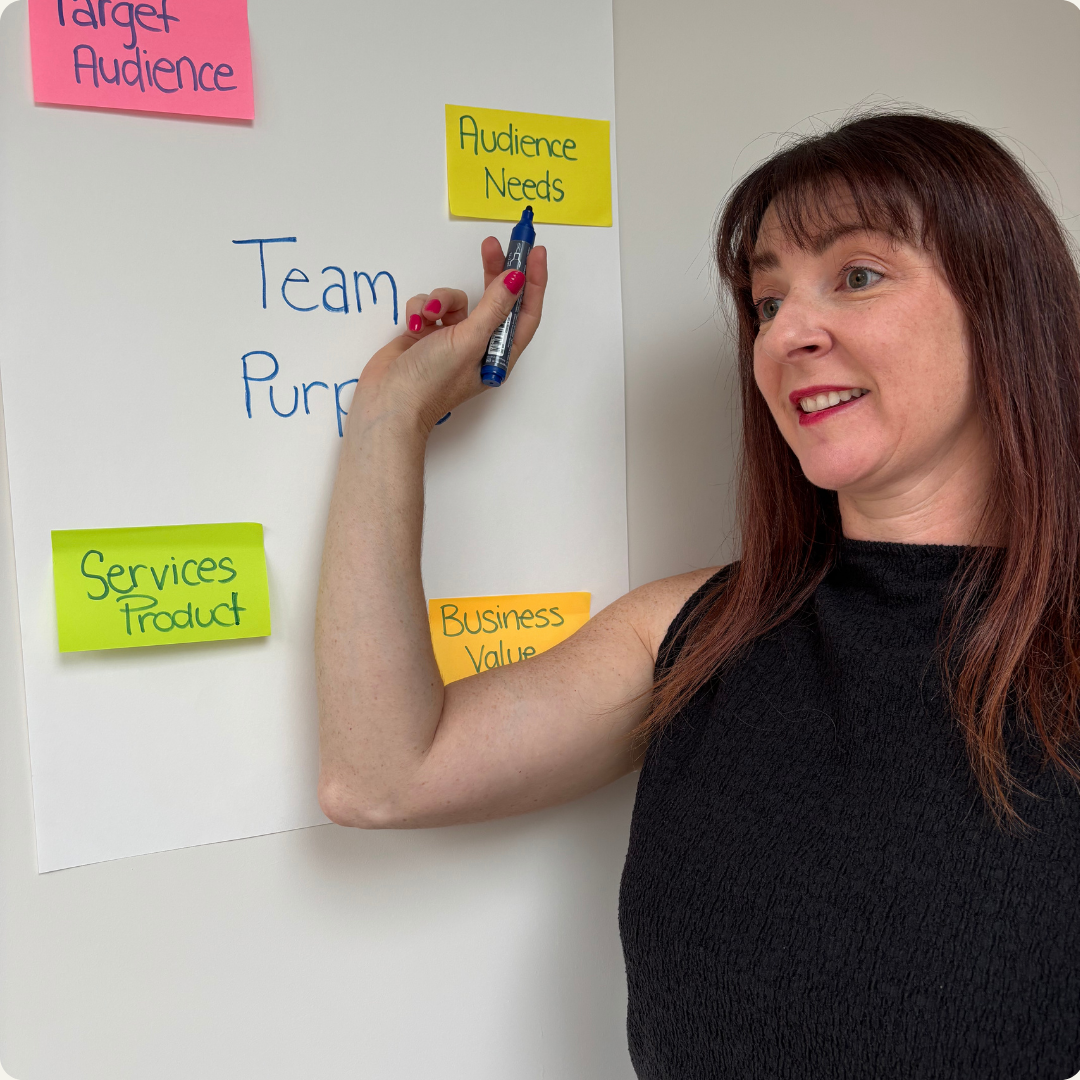
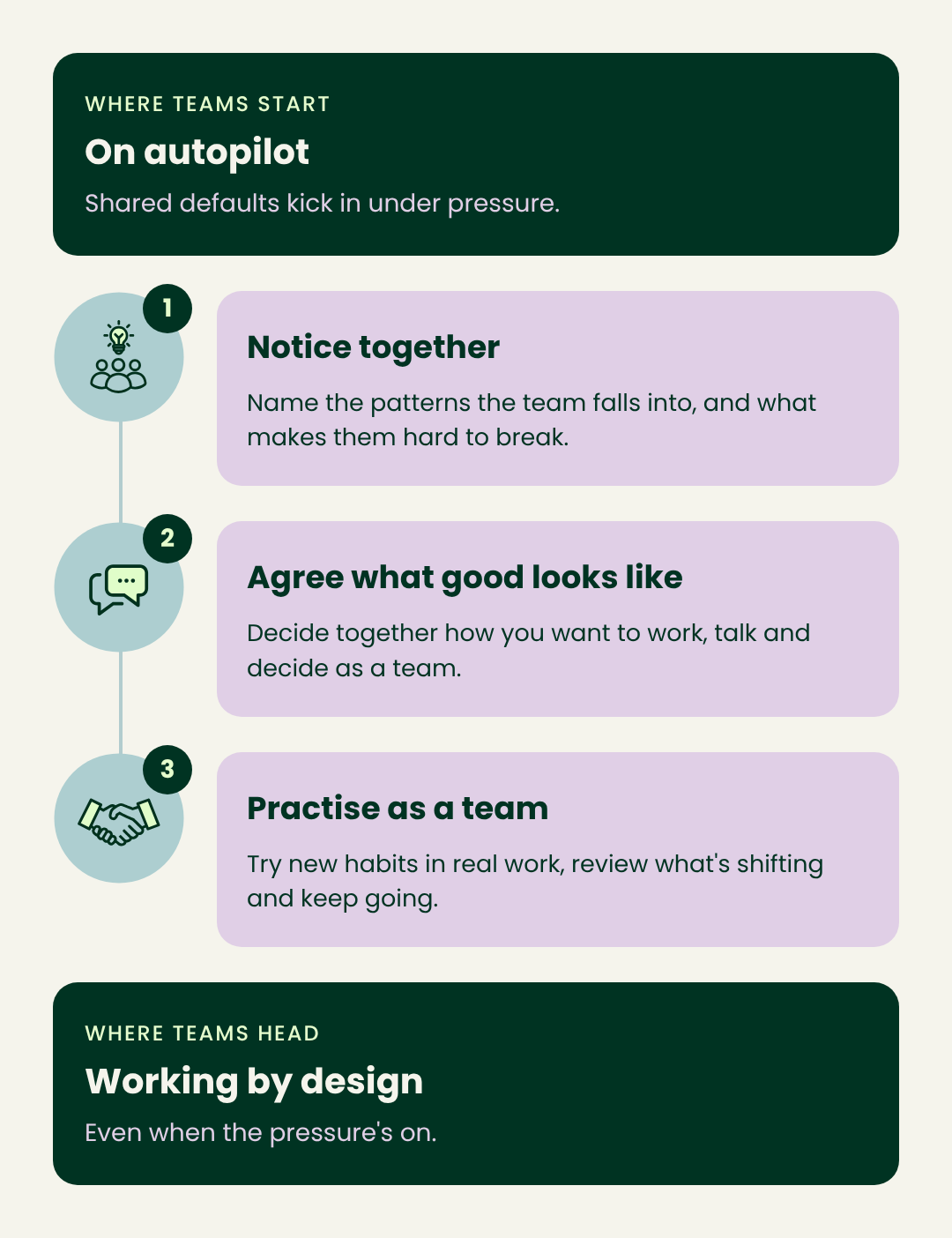
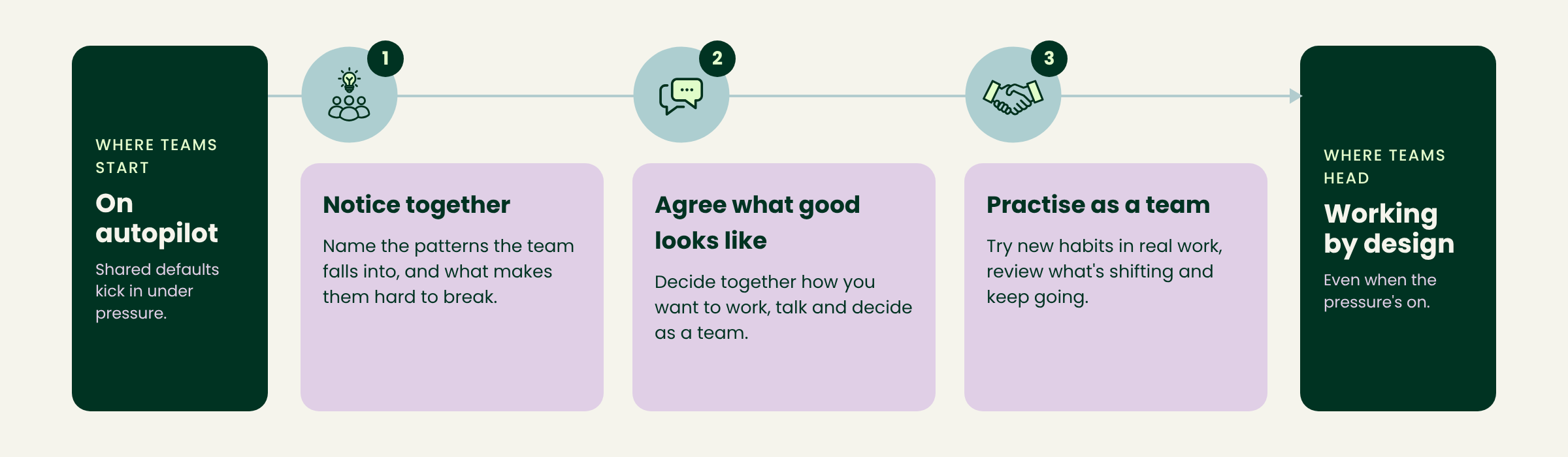
Teams build habits, just like people do. Under pressure, a team falls back on its shared defaults: the conversation everyone avoids, the decision that waits for the leader, the meeting where nobody quite says what they think.
Underneath, every brain in the room is quietly checking: is it safe to disagree? Will I still belong if I push back? When the answer is “not sure”, staying quiet usually wins. That’s the brain doing its job, keeping you safe in the group, even when it’s not what the team needs.
Team development works on those shared defaults, together, so the new way of working belongs to the whole team, not just the leader.
Where the brain comes in

How it works
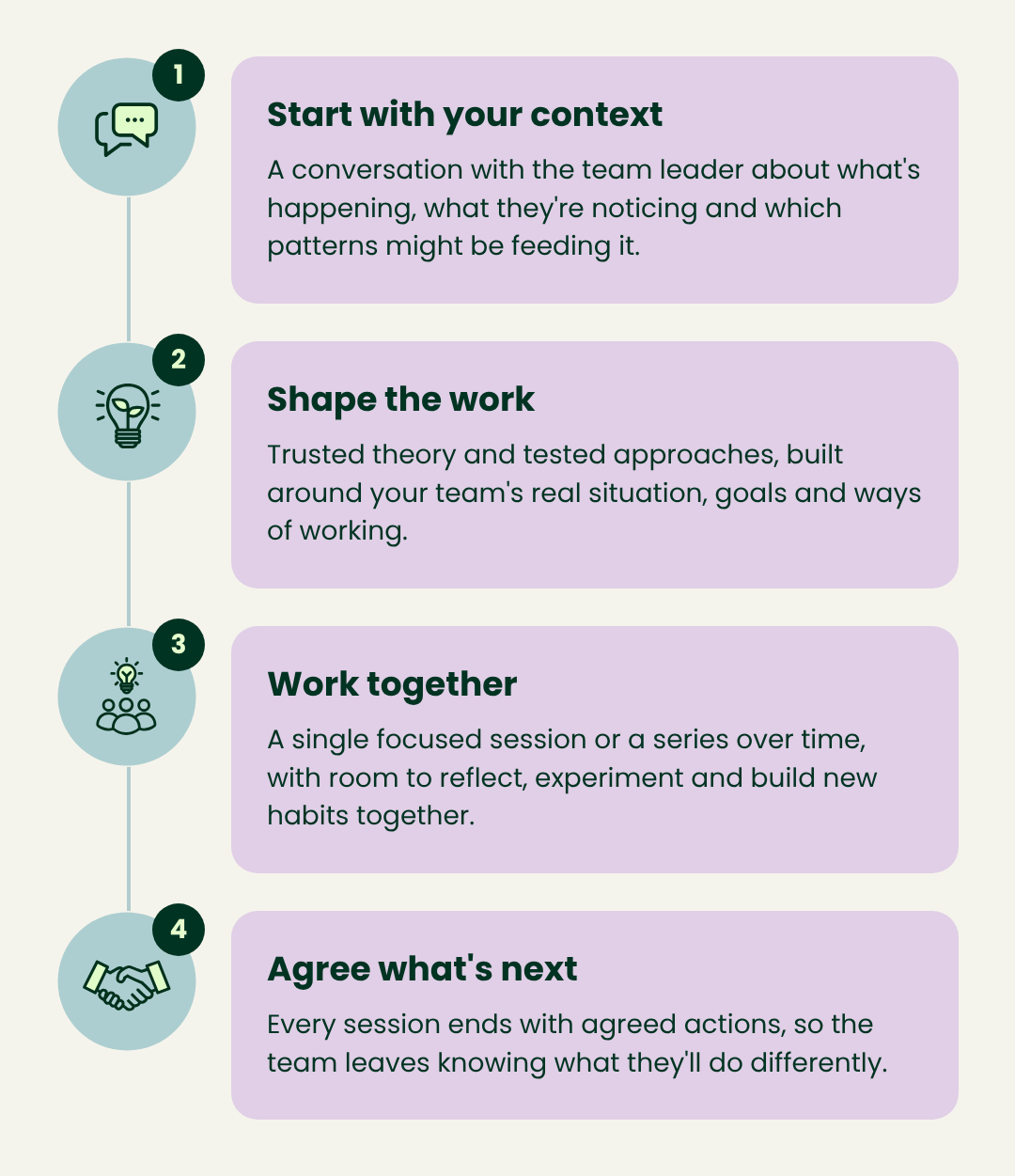
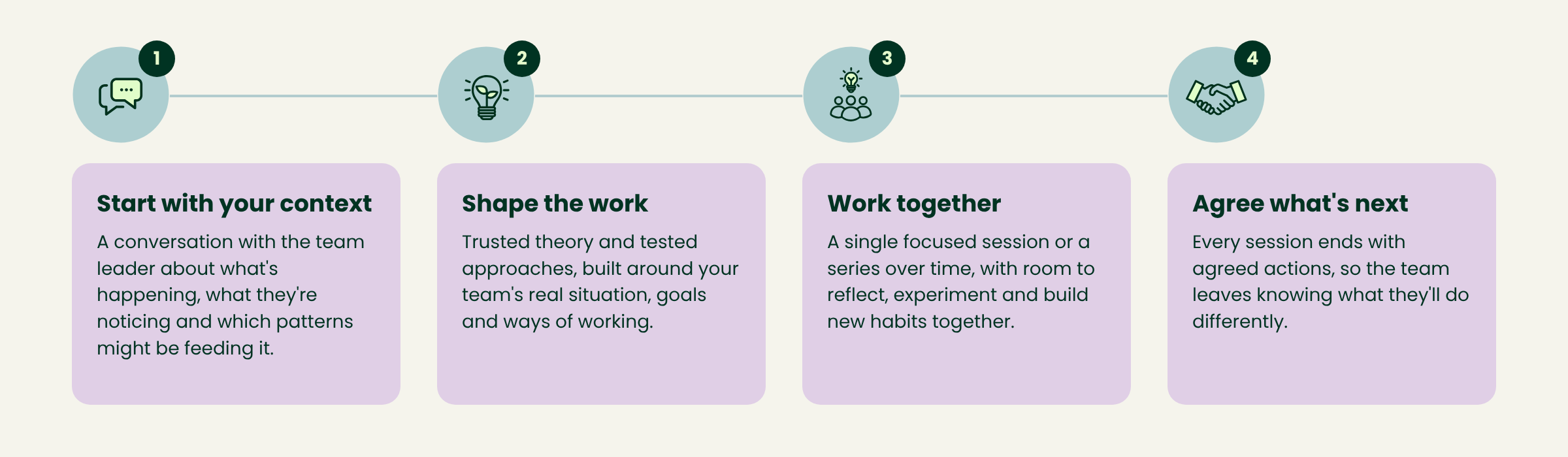
Team development doesn’t start with a standard programme or a list of behaviours to fix.
It starts with what’s happening in your team.
Ways we can work together
Single session (half day or full day)
For a focused challenge, a reset or a team that needs space to talk about what isn’t working.
Series (4 half days or 4 full days, spread over time)
For teams ready to build new habits, with time between sessions to reflect, experiment and bring back what they’ve learnt.
For HR and L&D teams
If you’re commissioning sessions for a team, I’m happy to talk through your specific needs and how it fits your wider programme.